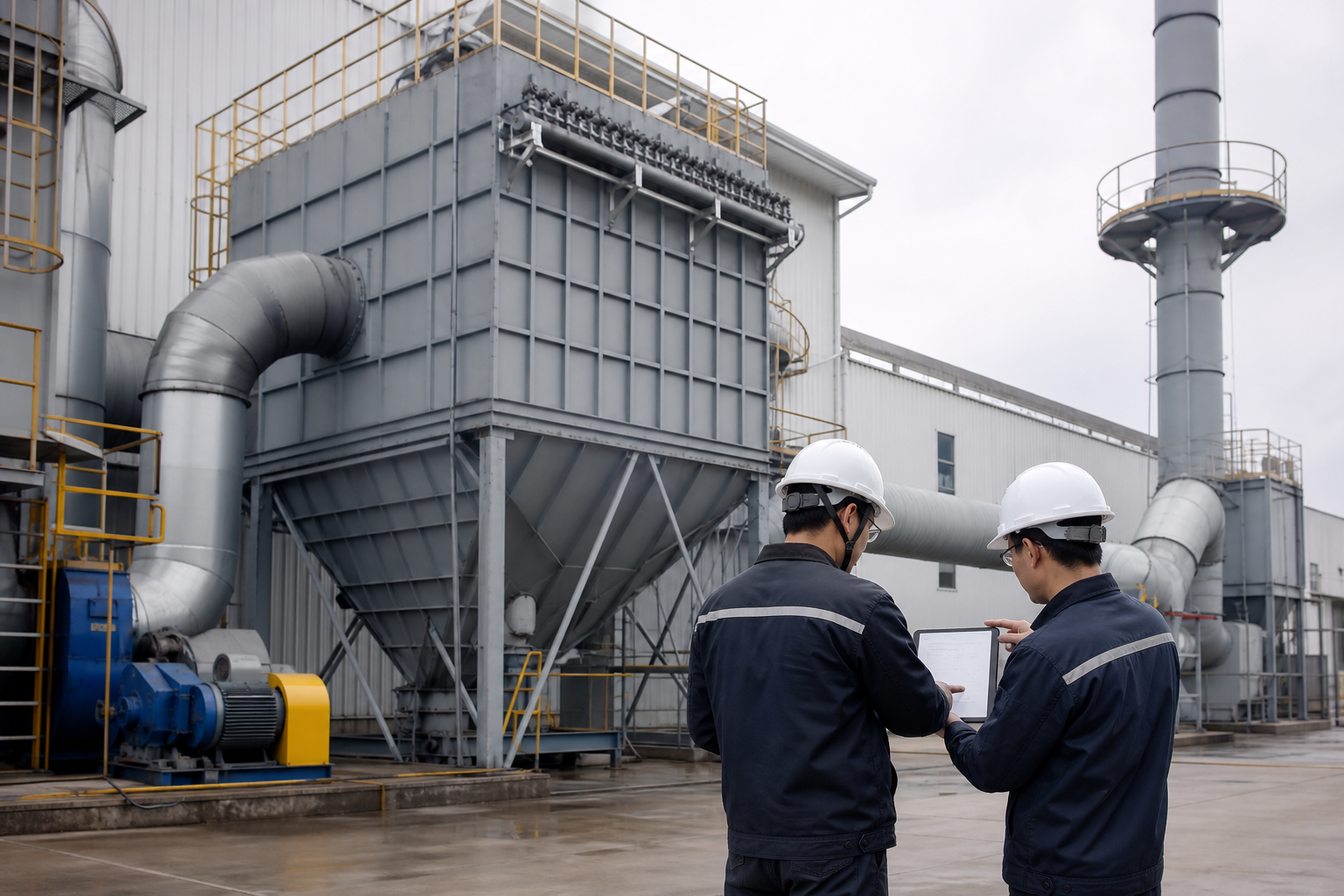
Raw Material Storage & Silo Section
Emission Characteristics
Glass raw materials such as silica sand, soda ash, limestone, and additives generate dust during silo filling, unloading, and venting. Dust dispersion may affect equipment reliability and workplace safety.
Recommended Treatment
- Silo vent dust collectors
- Cartridge or baghouse dust collection systems
- Explosion and abrasion protection where required

Batching & Mixing Section
Emission Characteristics
Batch weighing, mixing, and conveying generate fine particulate dust with frequent and intermittent emissions. Accurate dust control is critical to maintain batch consistency and clean production environments.
Recommended Treatment
- Enclosed batching systems
- Local dust extraction hoods
- Centralized dust collection systems

Melting Furnace Section
Emission Characteristics
Glass melting furnaces generate high-temperature exhaust gas containing dust, acidic components, and combustion by-products. Stable exhaust handling is essential to protect downstream equipment and ensure furnace efficiency.
Recommended Treatment
- High-temperature resistant ducting
- Cooling or heat recovery systems
- Dust filtration or gas scrubbing systems
Engineering Focus for Glass Panel Industry
Glass panel manufacturing requires integrated control of dust, high-temperature exhaust, VOCs, and acidic gases across different process stages. System design must prioritize material compatibility, operational stability, and long-term reliability.
AIER Solution Approach
AIER provides customized emission control solutions covering raw material handling, melting furnaces, and downstream glass panel processing. By integrating dust collection, exhaust cooling, VOC treatment, and acid gas scrubbing, AIER supports clean, safe, and compliant glass panel production.