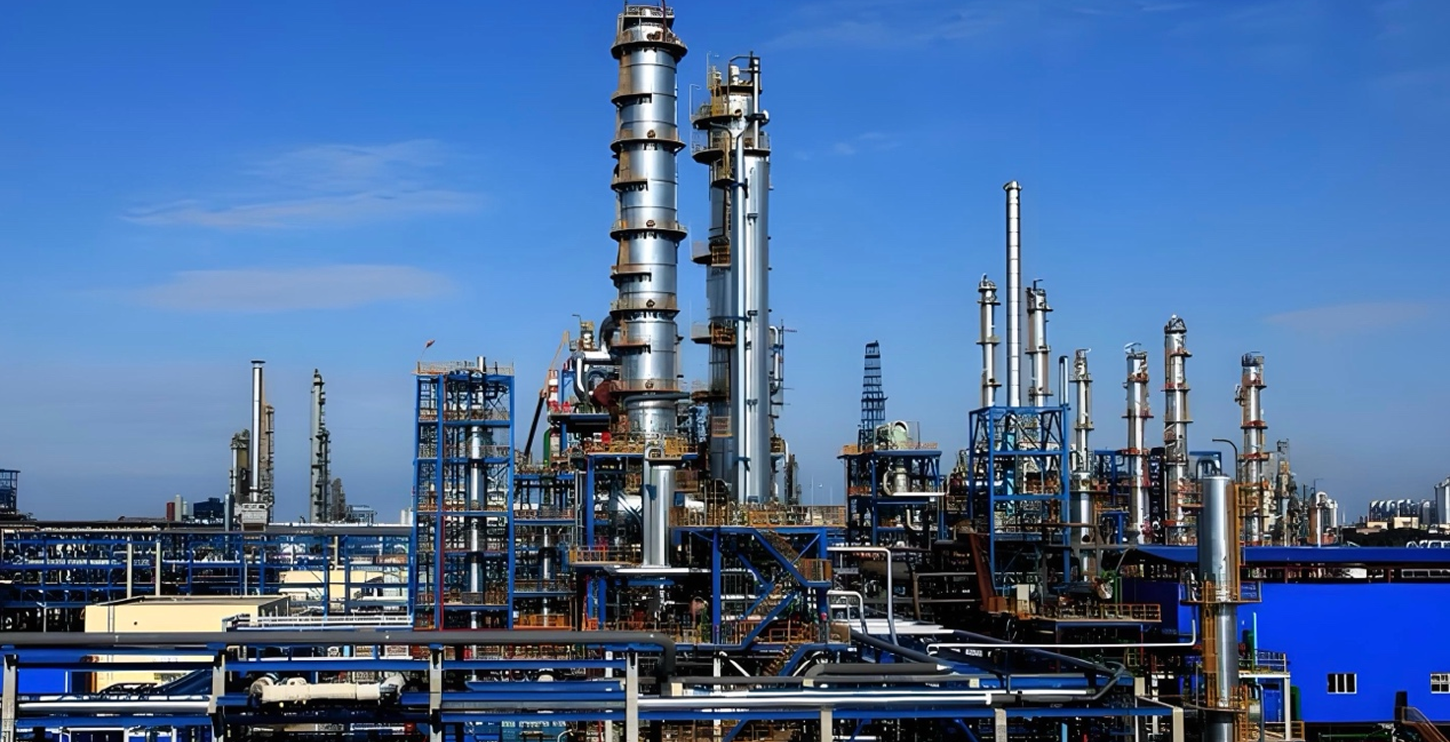
Challenges in Chemical Production Processes
Chemical emissions often include VOCs, acid and alkali gases, solvent vapors, odors, and combustible components. Emission concentrations may fluctuate significantly, with both intermittent and continuous emissions occurring within the same process. Many emissions are flammable, corrosive, or high-temperature, requiring strict safety and protection measures. Compliance requires stable and reliable performance over long-term operation, not only passing initial acceptance tests.

Reaction Section
Emission Characteristics
Chemical reactions often release high-concentration VOCs, solvents, and flammable gases. Emissions are typically batch-based with sudden peaks and high safety risks.
Recommended Treatment
- Sealed collection systems
- Heat exchanger / cooling system
- RTO (Regenerative Thermal Oxidizer)
- Explosion prevention and safety control systems
Drying & Curing Section
Emission Characteristics
Exhaust gas from drying processes is often high-temperature and contains VOCs mixed with dust or mist. Cooling and pretreatment are critical to ensure system stability.
Recommended Treatment
- High-temperature resistant collection system
- Cooling tower or heat exchanger
- Cyclone separator or dust filtration
- RTO or catalytic oxidation system
Storage & Tank Area
Emission Characteristics
Storage tanks release low-concentration but continuous VOC emissions and odors. Odor control and long-term stable operation are key concerns.
Recommended Treatment
- Carbon adsorption system
- Scrubber system (acid / alkali neutralization)
- Low-flow RTO system
- Odor control solutions
Engineering Focus for Chemical Industry
Effective VOC treatment requires balancing removal efficiency, energy consumption, and operational safety. System design must consider airflow management, explosion risk control, and stable long-term operation.
AIER Solution Approach
AIER provides customized VOC treatment solutions for chemical production applications. By integrating advanced oxidation technology, efficient heat recovery, and safety systems, AIER helps clients achieve reliable emission control and regulatory compliance.